
5 Myths About Grief and Loss
Grief and loss are often surrounded by well-meaning but misleading beliefs that shape how we think we should be grieving. These myths can create pressure to heal on a timeline, hide parts of our experience, or judge ourselves when grief doesn’t behave the way we expected. In this post, we’ll explore five common myths about grief and loss—and gently unpack what grief actually looks like when we allow it to be human, complex, and deeply connected to love.
Myth #1: Grief exists in a predictable timetable of stages with an endpoint.
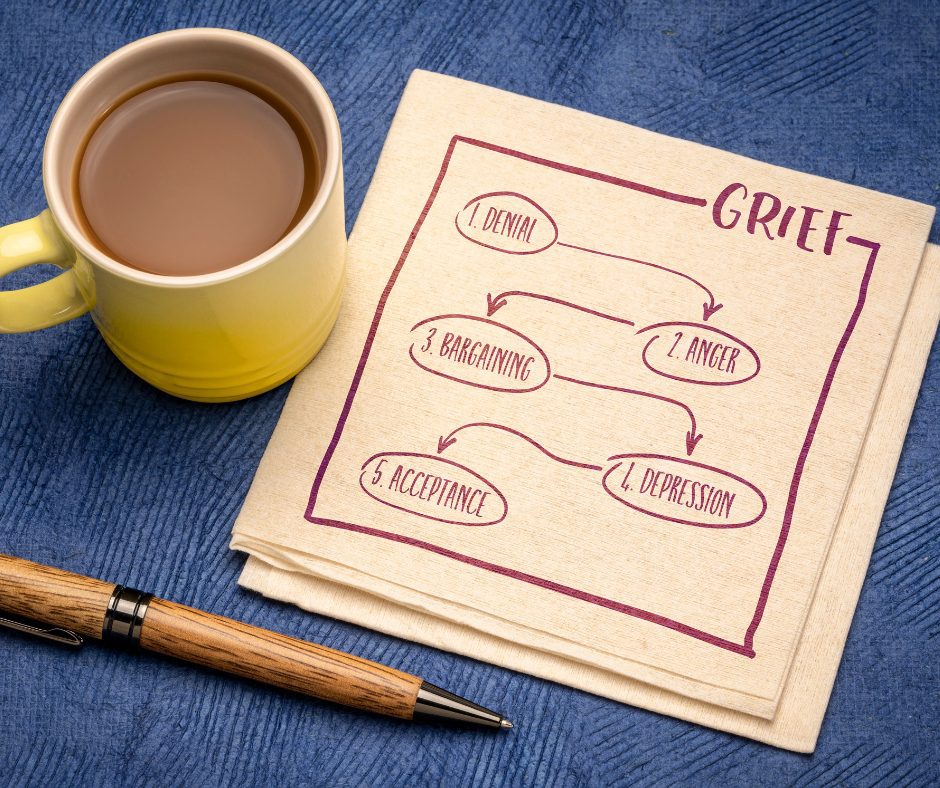
Reality: Grief lets us know what matters most to us, and the more significant the loss, the more likely it is to be present to some extent, reminding us how much we care.
- People expect “stages,” but real grief comes in waves.
- You can feel “fine” one day and undone the next.
- Progress doesn’t mean the pain disappears—it means you’re learning to ride the waves of grief and function within it, whether it’s showing up as a sharp pain or a dull ache.
Myth #2: Time heals all wounds

Reality: Pressure to “move on” often makes grief worse
Friends/family may unintentionally send messages like:
- “You should be doing better by now.”
- “At least…”
- “Everything happens for a reason.”
This creates shame, emotional suppression, and isolation.
Myth #3: GRIEF looks like sadness

Reality: Grief shows up in a variety of emotional experiences
While grief does include an intense sadness, it also can be found in:
- irritability/anger
- numbness
- brain fog and forgetfulness
- fatigue
- anxiety or panic
- changes in sleep/appetite
- feeling disconnected from others
- guilt (“I should’ve…”) or regret
Myth # 4: You can’t truly understand grief until someone you love dies

Reality: Grief is about LOSS and different losses create different grief
Some of the most profound grief occurs when we mourn the loss of someone still living. We also experience complex grief over the loss of expectations, when life somehow takes a wrong turn from what we were wanting and expecting.
This may be in the form of:
- divorce/breakups
- infertility/miscarriage
- estrangement
- loss of health, identity, or a future you expected
- moving, life transitions, retirement
- “ambiguous loss” (someone is here but not the same—addiction, dementia, mental illness)
Myth #5: The goal of grief is closure

Reality: A more reasonable and realistic quest is found in the process of searching for connection and meaning amidst the loss
Experiencing “triggers” doesn’t mean you’re back at square one. Rather, it’s love and memory meeting together in a moment.
- Holidays, anniversaries, songs, smells, and places can reopen the ache.
It can be helpful to keep in mind:
You don’t “close the chapter”. You build a new relationship with the person/loss through memory, ritual, values, legacy, or story.
What helps: learning to carry grief with support

Practical coping tools:
- Name the wave: “This is grief. It’s here right now.”
- Give it a container: journal, prayer/meditation, voice memo, letter to them
- Micro-care: food, water, sleep, movement (basic nervous system support)
- Rituals: lighting a candle, visiting a place, donation, traditions
- Talk to safe people: choose those who don’t rush or fix
- Ask for what you need: “Can you sit with me?” “Can you check in on Tuesdays?”
When to consider therapy and/or a support group (gentle indicators)

- you feel stuck in guilt, anger, or numbness
- you’re avoiding everything that reminds you of the loss
- you’re isolating or losing functioning
- the loss reactivates old trauma/attachment wounds
- grief is impacting parenting, marriage, or work
- you feel like you “should be coping/feeling better by now” but aren’t
Profound and prolonged grief doesn’t mean you’re doing something wrong. It means that what you lost matters. Love and loss, simply put, don’t know time.